
15 Most Valuable 1989 Topps Traded Baseball Cards

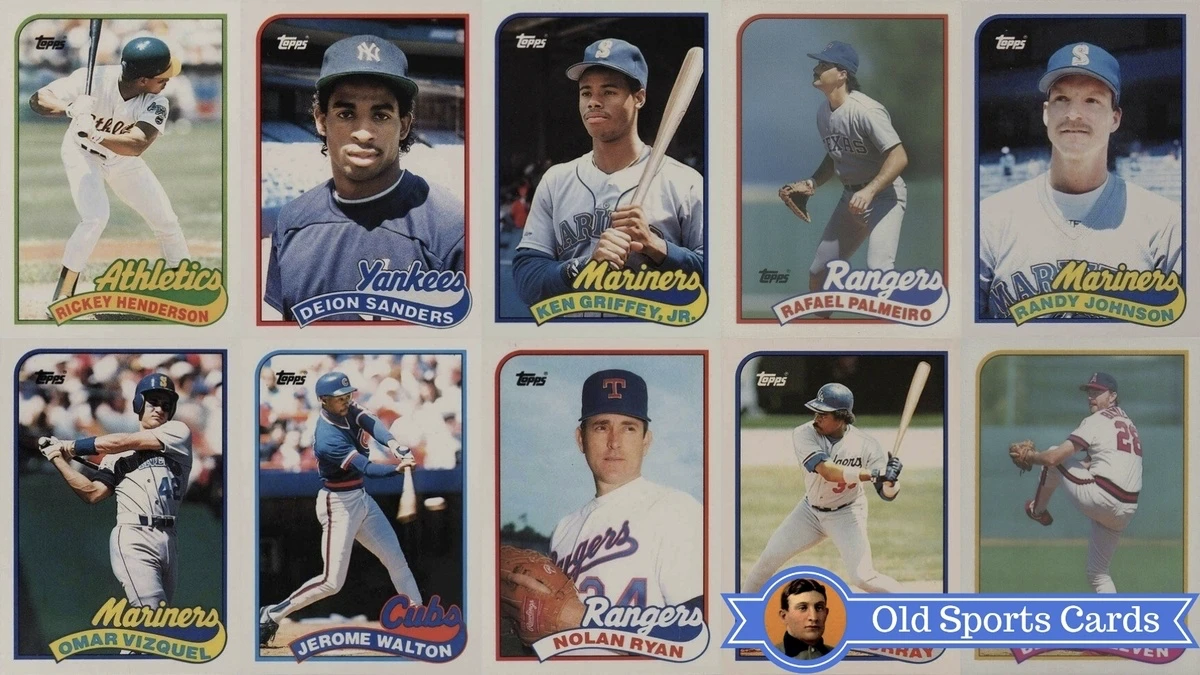
Like the flagship set that preceded it, the 1989 Topps Traded baseball card set offered collectors a straightforward, clean design with fantastic imagery.
And, to no one’s surprise, really, it produced a rookie card of one of the game’s greatest of all time…
Plenty of young players were hyped as future superstars throughout the 1980s.
But plenty of them went buSt. Ken Griffey Jr. was a glaring exception.
Though injuries hampered his eye-popping production in his later years, he still turned in one of the best resumes in baseball history.
His rookie card is the headliner to this 132-card box set.
But he’s not the only superstar in the checkliSt. And in this guide, we’ll take a look at the 15 most valuable.
Let’s jump right in!
1989 Topps Traded Baseball Set Snapshot
Stay On Top Of The Card Market
Weekly pricing updates, grading insights, and new card guides — straight to your inbox. For free.
Join thousands of collectors. Unsubscribe anytime.

Ross Uitts – Owner
-
#1
1989 Topps Traded #41T Ken Griffey Jr. Rookie Card
Rookie CardPSA 10 Value $210Total PSA Population 91,194PSA 10 Population 14,553PSA 10 Grade Rate 16.0% (Set Avg: 19.0%)As Ken Griffey Sr. toyed with the idea of retirement, his son, Ken Griffey Jr., wasted no time carving out a reputation of his own.
From the very beginning, “The Kid” showed flashes of his future greatness.
Griffey Jr. set multiple M’s Spring records and posted a 15-game hitting streak to run away with the team’s starting center fielder gig.
The path was now clear for the 19-year-old phenom to show the world what he could do.
And he began the 1989 MLB season with a boom.
Griffey ripped a booming double off of Oakland ace Dave Stewart on the second MLB pitch he saw and continued to rake as the early months went on.
He was an instantaneous star in the Pacific Northwest, easily living up to the hype that had preceded him.
When the dust settled on his rookie season, Junior finished third in the ROTY race, slashing .264/.329/.420 for sixth-place Seattle with 16 home runs, 23 doubles, 16 stolen bases, 61 runs scored, and 61 RBIs.
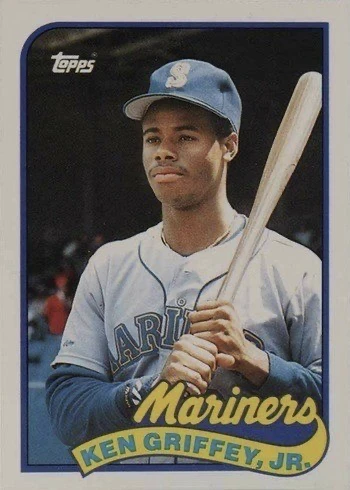
Considered to be one of his most popular rookie cards, the 1989 Topps Traded issue features a young Griffey staring confidently with a bat over his shoulder.
Yes, it’s technically part of the 1989 Topps Traded set, but I made an exception for Griffey and a few others on this liSt.
-
#2
1989 Topps Traded #110T Deion Sanders Rookie Card
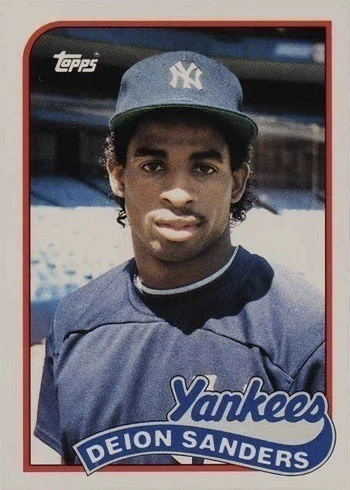
Rookie CardPSA 10 Value $55Total PSA Population 6,637PSA 10 Population 1,569PSA 10 Grade Rate 23.6% (Set Avg: 19.0%)Even after doing the unthinkable in September 1989, Deion Sanders kept his cool.
During his time at Florida State, Sanders made headlines for his three-sport prowess in baseball, football, and track and field.
He made even more headlines after leaving Tallahassee when he made his intentions known to play pro baseball and football.
Sanders was drafted twice in the MLB Draft, ultimately signing with the New York Yankees as a 30th-round pick.
In 1989, he was selected sixth overall by the Atlanta Falcons as a returner/defensive back.
“Prime Time” played 131 games in the Minors before receiving a late-season call-up to the Yankees.
At that time, he was in the middle of a contract impasse with the Falcons, scuttling his plans to join the team for training camp in July.
On September 5th, Sanders crushed a home run against the Seattle Mariners.
Two days later, he ended his holdout and signed a four-year deal with the Falcons.
Three days after that, he returned his first punt for a touchdown against the Los Angeles Rams, becoming the only player in MLB and NFL history to score a touchdown and hit a home run in the same week.
-
#2
1989 Topps Traded #106T Nolan Ryan
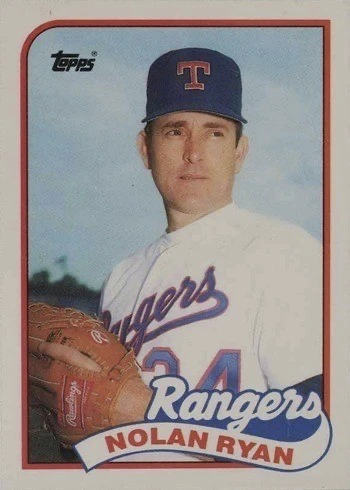
PSA 10 Value $75Total PSA Population 3,674PSA 10 Population 1,065PSA 10 Grade Rate 29.0% (Set Avg: 19.0%)Following a contract dispute with the Houston Astros in the wake of the 1988 MLB season, the 42-year-old righty signed with the Texas Rangers with plenty left to prove and plenty left in the gas tank.
In fact, Ryan threw absolute darts all year for his sixth and final 300-strikeout campaign.
With 301 strikeouts in 1989, Ryan became (and remains) the oldest pitcher in baseball history to hit the 300-strikeout plateau in a season.
He finished the 1989 campaign with a 16-10 record, a solid 3.20 ERA, and led the Majors in hits allowed per 9 innings (6.092).
He also finished fifth in the Majors in strikeout-to-walk ratio (3.071) and tied for fourth in walks given up (98).
Remarkably enough, this was the first of five seasons for the 42-year-old flamethrower in a Texas Rangers uniform.
Ryan hung up his cleats after the 1993 campaign following a UCL tear in his throwing arm, ending his career at 46 years of age as the all-time MLB leader in strikeouts (5,714), walks allowed (2,795), and hits allowed per 9 innings (6.6).
Also, the Hall of Famer’s seven no-hitters are three clear of second place (Sandy Koufax, 4) for the most in Major League Baseball history.
-
#3
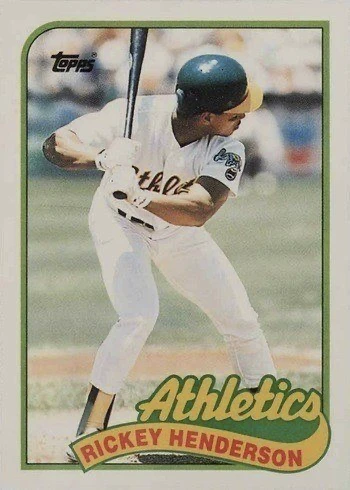
1989 Topps Traded #48T Rickey Henderson
PSA 10 Value $50Total PSA Population 1,162PSA 10 Population 319PSA 10 Grade Rate 27.5% (Set Avg: 19.0%)During his first stint in Oakland from 1979-1984, Rickey Henderson received American League MVP votes four different times, including a second-place finish in 1981.
However, Rickey’s brash personality rubbed many the wrong way and he was traded to the New York Yankees following the 1984 season.
After four-and-a-half stellar campaigns in pinstripes, Henderson came back to Oakland on June 21st, 1989.
Traded for the trio of Luis Polonia, Greg Cadaret, and Eric Plunk, Henderson was electric in his return to the defending American League champs.
Henderson led the Majors with 113 runs scored and 77 stolen bases between his time with the Yankees and A’s, while also pacing the American League with 129 walks.
Most importantly, perhaps, Henderson was named ALCS MVP in the A’s five-game triumph over the Toronto Blue Jays after slashing .400/.609/1.000 with two home runs, five RBIs, seven walks, and eight steals.
He followed that up with a sterling .474/.524/.895 slash line against the Giants, swiping three bases and driving in three during the team’s championship sweep.
-
#5
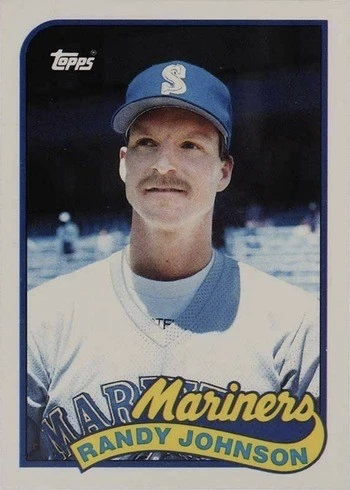
1989 Topps Traded #57T Randy Johnson
PSA 10 Value $40Total PSA Population 16,285PSA 10 Population 3,878PSA 10 Grade Rate 23.8% (Set Avg: 19.0%)One last straw was all it took for the Mariners to bring home one of the greatest pitchers of the modern era.
By the end of May, Seattle’s pitching staff ranked near the bottom of the Majors in nearly every major statistical category.
So, when the M’s got bludgeoned 10-0 by the Red Sox on May 25th, the front office sprung into survival mode, dealing free-agent-to-be Mark Langston to the Montreal Expos for pitchers Brian Holman, Gene Harris… …and Randy Johnson.
“We looked at a lot of packages, but we had to get pitching,” Mariners Director of Baseball Operations Woody Woodward said.
“We didn’t have the deal nailed down until after the game.” After Langston refused a three-year deal that same day, the Mariners saw no choice but to make a move.
That move brought them Johnson, a future Hall-of-Famer who’d go on to win five Cy Youngs, four ERA titles, a pitching Triple Crown, and a World Series MVP award.
The rookie lefty made 22 starts for 73-win Seattle in ’89, finishing 7-9 with a 4.40 ERA.
He surrendered just 118 hits in 131.0 innings for his new team, striking out 104 batters and walking 70.
-
#6
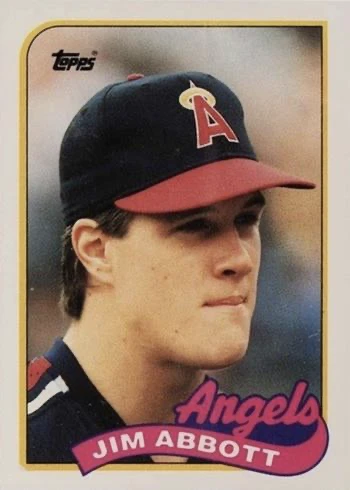
1989 Topps Traded #2T Jim Abbott
PSA 10 Value $20Total PSA Population 424PSA 10 Population 107PSA 10 Grade Rate 25.2% (Set Avg: 19.0%)Born without a right hand, Jim Abbott worked doubly hard to leave his disability in the duSt. This included learning how to switch a left-handed glove from his right arm to his left as soon as he was required to field.
The results of his tireless efforts were breathtaking.
In 1987, the University of Michigan sophomore was named the nation’s best amateur baseball player and best amateur athlete.
He then went on to win a gold medal with the 1988 US baseball team and to become the first US pitcher to beat the Cuban national team on Cuban soil in 25 years.
When the Angels picked Abbott eighth in the 1988 MLB Draft, he may already have been the most beloved member of their organization.
He was also MLB-ready, skipping the Minors entirely to join the big-league squad in ’89.
Unfazed by the wild media frenzy over his every move, Abbott won 12 games in his first pro baseball season, the most since Ernie Wingard won 13 for the 1924 St. Louis Browns.
He finished fifth in the AL Rookie of the Year race, pitching to a 3.92 ERA and striking out 115 in 181.1 innings pitched.
-
#7
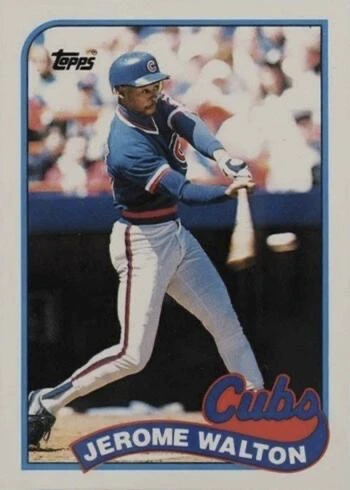
1989 Topps Traded #123T Jerome Walton Rookie Card
Rookie CardPSA 10 Value $20Total PSA Population 50PSA 10 Population 28PSA 10 Grade Rate 56.0% (Set Avg: 19.0%)The rest of his career did not go as planned, but that doesn’t make Jerome Walton’s rookie year any less impressive.
Promoted from Triple-A early in the campaign, the young center fielder quickly announced himself as one of baseball’s most dangerous leadoff hitters.
Both a speedster and a refined gap-to-gap hitter, Walton hit just a shade under .300 (.293) with 23 doubles and 24 stolen bases in 515 plate appearances.
The one-two rookie punch of Walton and Dwight Smith became fast fan favorites at Wrigley, jockeying back and forth for Rookie of the Year honors as 93-win Chicago marched to a division title.
At season’s end, Walton took 24 of 26 first-place votes to become the Cubs’ first Rookie of the Year since Ken Hubbs in 1962.
Smith received the other two votes.
“I’m glad I won it and I’m glad he’s the runner-up,” Walton said.
“Me and Dwight tried to pump each other through the season.
We’ve always been friendly.” Walton finished his breakthrough campaign with a fine NLCS performance, going 8-for-22 in the team’s five-game loss to San Francisco.
It was arguably the last big moment of his MLB career.
-
#8
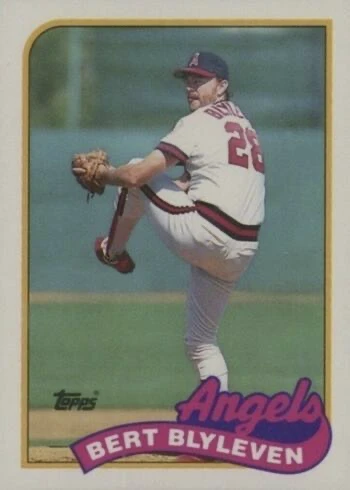
1989 Topps Traded #11T Bert Blyleven
PSA 10 Value $15Total PSA Population 74PSA 10 Population 27PSA 10 Grade Rate 36.5% (Set Avg: 19.0%)Bert Blyleven’s career was left for dead several times.
In 1989, he resurrected yet again, this time in front of his hometown friends and fans.
In 1988, the then-Minnesota Twins righty posted the worst ERA (5.43) and most losses (17) for a qualified starter in the Bigs.
Now heading into his age-38 season, it appeared Blyleven’s time as baseball’s favorite cockroach was coming to an end.
Not so faSt. Shortly after the ’88 campaign, the Twins traded the veteran righty to the California Angels for two prospects.
A Garden Grove native, Blyleven’s childhood dreams were now coming true.
“I’ve dreamt about this since I was growing up,” Blyleven said.
Rejuvenated by the return to his native Southern California, the 38-year-old star turned back the clock for one the best years of his career.
Blyleven finished 17-5 for the third-place Angels and nearly cut his previous year’s ERA in half (2.73).
He walked a career-best 1.6 batter per nine innings and threw a league-best five shutouts, the last coming in his final start of the year.
-
#9
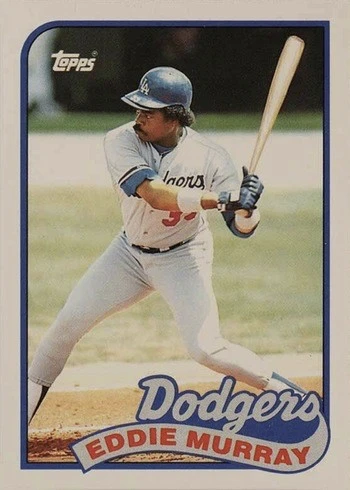
1989 Topps Traded #87T Eddie Murray
PSA 10 Value $15Total PSA Population 205PSA 10 Population 91PSA 10 Grade Rate 44.4% (Set Avg: 19.0%)Eddie Murray’s final year in Baltimore was unequivocally awful.
Five years after winning the 1983 World Series, the O’s had devolved into the worst team in baseball.
Unwilling to talk to the media and at odds with owner Edward Bennett Williams, Murray was cast as the scapegoat for Baltimore’s sharp fall from grace.
O’s fans jeered Murray through the ’88 campaign.
His 28 home runs offered little respite from the boos as the team spiraled to a 54-107 finish.
At an impasse with the organization and the city, Murray was given a reprieve when he was traded to the Dodgers in the offseason.
After 12 tumultuous years with the Orioles, it was time to start again.
However, his first year in LA wasn’t what anyone hoped it would be.
Despite hitting 20 home runs and driving in 88, the 33-year-old first baseman had his worst season as a big-leaguer thus far, setting new lows for batting average (.247), slugging percentage (.401), and OPS (.743).
The defending World Series champs backslid to a 77-83 record, and Murray was again under scrutiny.
-
#10
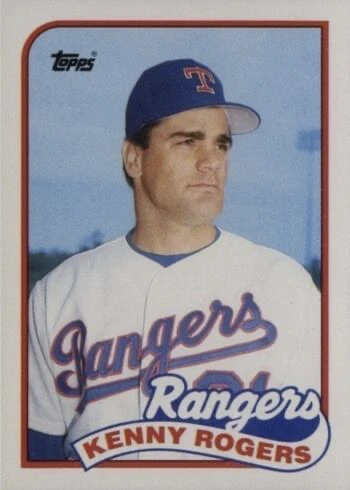
1989 Topps Traded #104T Kenny Rogers Rookie Card
Rookie CardPSA 10 Value $15Total PSA Population 131PSA 10 Population 47PSA 10 Grade Rate 35.9% (Set Avg: 19.0%)Kenny Rogers may be the best developmental success story in Texas Rangers franchise history.
After just one year of high school baseball, Rogers was swooped up by the Rangers in the 39th round of the 1982 MLB Draft.
It wasn’t the shortstop’s .375 average for Plant City High School that got him the nod.
The Rangers’ scouting staff was wowed by the zing of Rogers’ throwing arm.
The fact that he was left-handed was even better.
Rogers joined the organization at 17 and was never considered for a position-player role.
Instead, the team’s minor-league staff worked for seven years to teach him the ropes of being a professional pitcher.
They worked from the ground up, building a deadly pitch arsenal out of steady, slow progress.
In 1989, Rogers rewarded the Rangers’ patient approach with a fantastic rookie year out of the ‘pen.
The 24-year-old workhorse tied for fifth in the Majors with 73 appearances, pitching to an impressive 2.93 ERA in 73.2 innings.
He worked any role manager Bobby Valentine asked him to and worked it well, striking out 63 batters as everything from a bridge reliever to a mop-up finisher.
-
#11
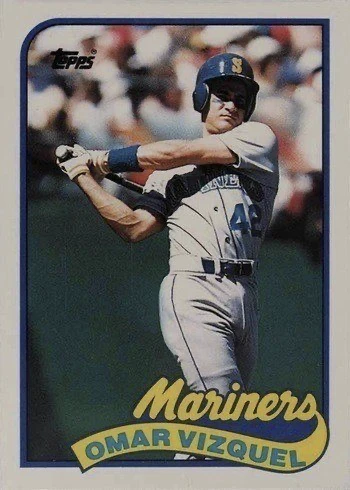
1989 Topps Traded #122T Omar Vizquel Rookie Card
Rookie CardPSA 10 Value $15Total PSA Population 2,089PSA 10 Population 1,091PSA 10 Grade Rate 52.2% (Set Avg: 19.0%)Omar Vizquel’s record of 2,709 games at shortstop might not be a thing if not for a contract dispute.
With Rey Quiñones locked in as the team’s starting SS, the Venezuelan native was all but guaranteed to head to Triple-A after Spring Training.
That all changed when Quiñones reported late to camp.
Vizquel’s hitting wasn’t there, but his defense was.
The more he held it down at short, the more expendable the more expensive Quiñones became.
By the last day of Spring Training, Quiñones was off to Pittsburgh, and Vizquel had edged Mario Diaz for the starting job.
“I had to ask one of the coaches, ‘What do I do with my bags?
I need to know, because people are packing,'” Vizquel said later.
Vizquel had a rough year at the plate in ’89, slashing .220/.273/.261 in 431 plate appearances (387 at-bats).
Yet, his glove work was stellar enough to keep him in the lineup for 143 games.
If he had failed to crack the big-league squad in ’89, Vizquel would have finished his career with 2,566 games at the six, fifteen shy of former record holder Luis Aparicio and over a hundred less than current runner-up Derek Jeter.
-
#12
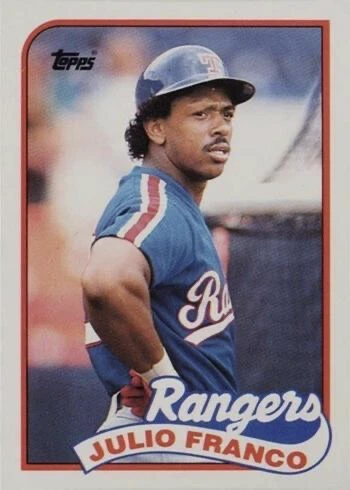
1989 Topps Traded #34T Julio Franco
PSA 10 Value $15Total PSA Population 21PSA 10 Population 6PSA 10 Grade Rate 28.6% (Set Avg: 19.0%)Julio Franco was one of the most underrated hitters of the 1980s.
He was also uncompromising and sometimes hard to get along with.
“Julio Franco is the kind of guy you want to kiss one time and kick the next,” former Indians manager Pat Corrales said.
Franco played six years with the Cleveland Indians from 1983-1988, topping .300 in the last three.
By 1987, though, the Indians had circled their abrasive second baseman as a trade chip, shopping him to suitors in hopes of filling multiple holes on the roster.
The Indians almost pulled the trigger on a multi-man deal with the Yankees in ‘87, but that fell through.
A year later, the Indians got the haul they were looking for: offloading Franco to the Texas Rangers for a three-player package.
Franco joined new acquisition Rafael Palmeiro in Texas’ remade infield and didn’t miss a beat.
Now batting fifth (and enjoying much more lineup protection), the first-time All-Star and two-time Silver-Slugger hit .316 and set new career-highs for home runs (13), RBIs (92), walks (66), slugging percentage (.462), and OPS (.848).
-
#13
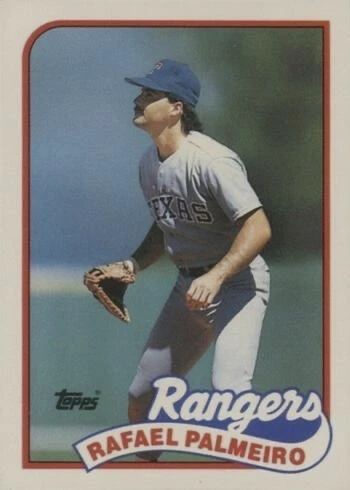
1989 Topps Traded #93T Rafael Palmeiro
PSA 10 Value $10Total PSA Population 126PSA 10 Population 24PSA 10 Grade Rate 19.0% (Set Avg: 19.0%)Despite posting a top-ten batting average (.307) in 1988 and making his first All-Star team, Chicago Cubs first baseman Rafael Palmeiro found himself on the trade block.
Ironically enough, Palmeiro’s lack of power punched his ticket for Texas.
Palmeiro hit just eight home runs in ’88, a stark contrast to the burly, power-hitting first basemen of the time.
Two months after the campaign, Palmeiro was traded to the Rangers as part of a nine-player deal.
He wasn’t shy about his feelings.
“That’s what happens when you have (a manager and general manager) who don’t know what the hell’s going on,” Palmeiro said at the time.
In later years, Palmeiro would become one of the most feared home-run hitters in the game.
However, his first year in Arlington appeared to validate the concerns of the Cubs’ front office.
The 24-year-old Cuban native hit .275 with a career-low .728 OPS in ’88, hitting just eight home runs once again, this time in three more plate appearances (632).
Palmeiro’s down year was just one of several disappointments for a revamped Rangers squad that finished fourth in a stacked AL WeSt.
-
#14
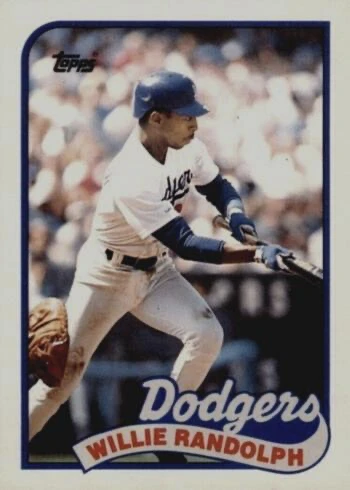
1989 Topps Traded #100T Willie Randolph
PSA 10 Value $10Total PSA Population 36PSA 10 Population 19PSA 10 Grade Rate 52.8% (Set Avg: 19.0%)Willie Randolph was a Gold Glove-caliber second baseman born in the wrong era.
Over the first fourteen years of his MLB career, Randolph’s lowest fielding percentage was .972.
He topped .980 seven times, a wild accomplishment, considering the rigors and complexity of the second-base position.
However, Randolph was stuck in the same league as Gold Glove stalwarts such as Detroit’s Lou Whitaker and Seattle’s Harold Reynolds.
He couldn’t buy a break.
It was always the same story, even when he moved to the National League for year #15.
On a one-year deal with the Los Angeles Dodgers, Randolph slashed .282/.366/.326 to earn his sixth All-Star nod.
He also posted the second-best fielding percentage of his career, committing just nine errors in 681 chances (.987).
Unlucky for Randolph, he was now in the same league as Ryne Sandberg.
The Chicago Cubs star posted a .992 fielding percentage to grab his ninth straight Gold Glove, once again leaving Randolph out in the cold.
-
#15
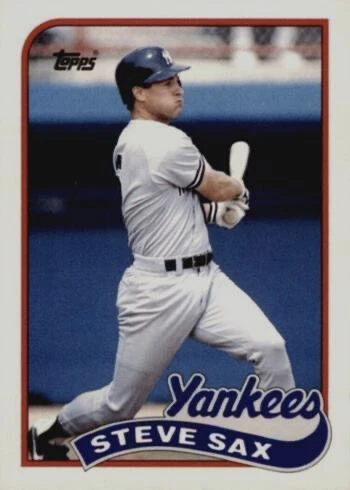
1989 Topps Traded #111T Steve Sax
PSA 10 Value $10Total PSA Population 45PSA 10 Population 17PSA 10 Grade Rate 37.8% (Set Avg: 19.0%)In 1983, Steve Sax was a defensive sideshow.
In 1989, Sax was one of the best second basemen in baseball.
It was a stunning transformation.
Sax became a one-man comedy show in his second big-league season, wildly missing the mark on routine throws en route to a 30-error campaign.
Known now as the “yips,” the formerly-named Steve Sax Syndrome led fans to half-jokingly wear helmets behind the first-base dugout at Dodger Stadium.
Six years later, Sax was now playing the steadiest defense of his career as the newest member of the New York Yankees.
He led all AL second basemen in fielding percentage (.987), committing just 10 errors in 782 chances.
Sax also topped the AL in double plays turned at second base (117).
Considering Sax’s production at the plate, his defense was a hell of a luxury for the 74-win Yankees.
The 29-year-old All-Star led all New York hitters in batting average (.315), runs scored (88), and stolen bases (43).
He also led the team with 205 hits, the second-and-last time in his career that he reached 200 hits for a season.

Ross’s Take
So there you have it, the fifteen most valuable 1989 Topps Traded cards.
As you can see, there are plenty of other big-name superstars to enjoy besides Ken Griffey Jr. and his rookie card.
Guys like Nolan Ryan, Rickey Henderson, Randy Johnson, and Eddie Murray are some of the game’s all-time greats.
And there are other great names like Jim Abbott, Steve Sax, and Jerome Walton who were hobby favorites of the era.
It’s a great set overall and features plenty for the true hobbyist to enjoy.
While many of the cards in this set are basically worthless in today’s market, it is certainly not short on the nostalgia meter.
Love old cards? Get weekly updates from a fellow collector.
Pricing updates, grading insights, and new guides on the cards you actually care about — the junk wax era, vintage, and everything in between. One email a week. No fluff.
Free. No spam. Unsubscribe anytime.
Ross Uitts – Owner
