
Pete Rose Rookie Cards: Values, Grading and What’s Worth Buying

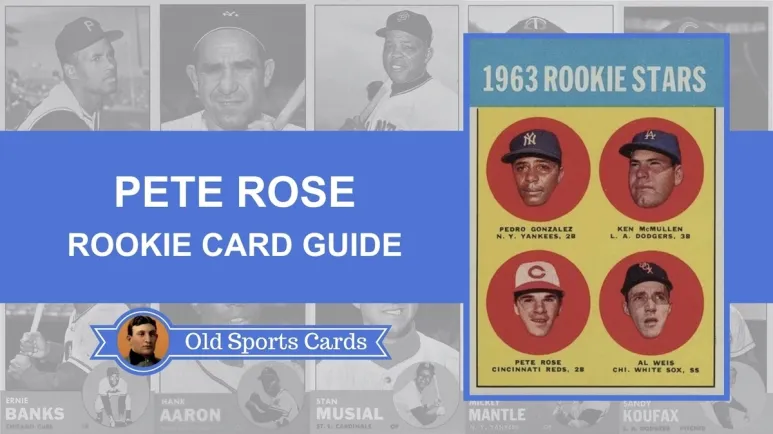
The 1963 Topps Pete Rose rookie card is arguably the most recognizable and important baseball card of the 1960’s.
Nolan Ryan’s 1969 Topps rookie card gives it a run for its money but if you ask most collectors they’d probably side with Rose.
In my opinion, condition sensitivity is a huge driver in the debate.
Rose’s rookie is far tougher to find in high grade since the 1963 Topps set faced far fewer printing issues than their 1968 Topps set.
Debating aside, there is no doubt that Rose’s rookie is extremely sought after and one of the most valuable baseball cards in the hobby.
To help you learn about the ins and outs of this popular baseball card, here is a comprehensive guide that covers the key things you should know before you buy.
Let’s jump right in!
Need Help Selling Your Sports Cards?
Fill out the form below and I’ll get back to you within 24 hours. No obligation.

Ross Uitts – Owner
Rookie Cards
Pete Rose has one true rookie card, and it is a giant of the hobby: the 1963 Topps #537.
Like a lot of vintage rookies it is a multi-player card, sharing the front with three other young hopefuls under the “Rookie Stars” banner, but it is Rose’s presence that makes it one of the most chased rookies of the entire post-war era.
The card is famously hard to find well centered, and the corners and edges show wear quickly, so condition is everything here.
Lower grades stay attainable for collectors on a budget, while high-grade examples climb into serious money and rarely sit still on the market.
Whatever you can afford, this is the card every Rose collection is built around, and the one piece of cardboard tied directly to baseball’s all-time hits leader.
-
1963 Topps #537 Pete Rose Rookie Card
PSA 8 Value $18,500 – $19,000Total PSA Population 7,322PSA 8 Population 427PSA 8 Grade Rate 5.8% (Set Avg: 28.6%)PSA Population Distribution
1253316991,1361,0571,2791,00642730112345678910The 1963 Topps card is Rose’s only recognized mainstream rookie card.
It’s the key to the set and arguably the most valuable and important cards of the 1960’s.
It’s usually a tough debate depending on who you ask as the Nolan Ryan rookie card is also right up there.
Topps went with a vertical layout but gave the rookie cards a unique design by placing rookies in groups of four showing just the players’ faces.
Alongside Rose is the New York Yankees’ Pedro Gonzalez, Ken McMullen of the Los Angeles Dodgers and Al Weis of the Chicago White Sox.
None of those players achieved the success that Rose did but at the time they were all considered potential stars.
The first thing most collectors ask is: how much is a Pete Rose rookie card worth?
You might be surprised as the price can vary from a few hundred bucks to the high six-figure range.
Condition is everything in the vintage baseball card hobby and it is especially true with this card.
In poor condition, the card will earn you some nice money but in top condition you’re talking major money.

Other Early Key Career Cards
Beyond the 1963 Topps, Rose’s earliest cardboard lives in a cluster of Cincinnati regional issues from his rookie year.
The 1963 Reds Picture Pack, the team-issued postcards, and the scarce French Bauer Reds Milk Caps were all local, limited releases, the kind of items that never reached national distribution and are genuinely tough to find today, especially in nice shape.
The other card here is his 1964 Topps #125, his first solo base card and a popular follow-up to the rookie.
It is far more affordable than the 1963 and gives collectors a clean, single-player image of a young Rose.
For anyone who already owns the rookie and wants to go deeper into his earliest years, these regional oddballs and the 1964 Topps are where the real hunt begins.
-
1963 Cincinnati Reds Picture Pack Pete Rose
PSA 6 Value $850Total PSA PopulationPSA 6 PopulationPSA 6 Grade Rate 0.0% (Set Avg: 0.0%)This one is not a trading card at all, but a team-issued picture pack photo the Reds sold at the ballpark and through the mail in 1963.
Like the Topps rookie, it dates to Rose’s first season in Cincinnati, which is a big part of the appeal.
The format is a larger glossy photo with a facsimile signature and no stats on the back, the kind of keepsake fans tacked to a bedroom wall.
Because these were regional and never nationally distributed, clean surviving examples are tough to find.
For a Rose collector, it is an affordable, genuine piece of his rookie year.

-
1963 Cincinnati Reds Postcards Pete Rose
PSA 4 Value $1,200Total PSA PopulationPSA 4 PopulationPSA 4 Grade Rate 0.0% (Set Avg: 0.0%)Another regional Reds issue from Rose’s 1963 rookie season, this one came as a team-issued postcard.
The Reds, like many clubs of the era, mailed these to fans who wrote in requesting a player photo, usually a black-and-white or sepia image with a facsimile autograph and a postcard back.
They were never sold in packs and never had national distribution, so they trade as oddballs rather than mainstream cards.
Condition varies wildly because many were actually mailed, postmarked, and handled.
A clean, unwritten example of the young Rose is a charming and still affordable way to own a true rookie-year piece.

-
1963 French Bauer Reds Milk Caps Pete Rose
PSA 8 Value $17,000Total PSA PopulationPSA 8 Population 0PSA 8 Grade Rate 0.0% (Set Avg: 0.0%)This is the scarcest and most interesting of Rose’s regional rookie-year items.
French Bauer was a Cincinnati dairy, and in 1963 they issued small round cardboard milk caps featuring Reds players, a local food-issue promotion that never traveled beyond the area.
The Rose cap is a genuine rookie-year piece and a real prize for collectors who chase oddball and regional cards.
Because they were tied to a perishable product and produced in limited numbers, very few survived, and high-grade examples are extremely difficult to find.
If you want something almost no other Rose collector has, this regional milk cap is the one to hunt.

-
1964 Topps #125 Pete Rose
PSA 8 Value $5,250 – $5,500Total PSA Population 9,129PSA 8 Population 346PSA 8 Grade Rate 3.8% (Set Avg: 29.0%)PSA Population Distribution
2216571,2131,8121,4061,3437683463612345678910It’s not technically his rookie card but it’s worth discussing since the image of the All-Star Rookie Cup in the lower right may cause confusion.
In 1960, Topps selected an “All-Star Rookie Team” to honor the best rookies of the 1959 season.
Those players received a trophy symbol on their card the following year as a result.
Topps continued that tradition off and on from that year on.
So that’s where the symbol on Rose’s 1964 Topps card comes from: he was honored as on of the top rookies of 1963.
Of the three other players featured on his actual 1963 Topps rookie, only Al Weis received the All-Star Rookie Team honor on his 1964 Topps card.
Pedro Gonzalez actually showed up as one of the 1964 New York Yankees rookie stars while Ken McMullen’s card was designed as any other base card in the set.

Ross’s Take
Pete Rose was one of the greatest but most controversial to ever play the game.
No one questions his ability.
On his way to becoming the game’s all-time hit king with 4,256 base hits, Rose was named NL Rookie of the Year in 1963, won the 1973 NL MVP, was selected as an All-Star 17 times, and won three World Series rings and NL batting titles.
The guy could flat out hit.
But it was his well-covered and much-debated gambling on baseball games while a player and manager that keeps him out of the MLB Hall of Fame.
Who knows if MLB will ever let him into Cooperstown?
There’s no doubt he’s got the stats and achievements to make an easy case.
It’s just a question of the committee’s stance on his gambling ever changing or not.
No matter if he gets into the Hall or not, Pete Rose rookie cards will continue being extremely popular and sought after among sports card collectors for years to come.
