
25 Most Valuable 1962 Topps Baseball Cards

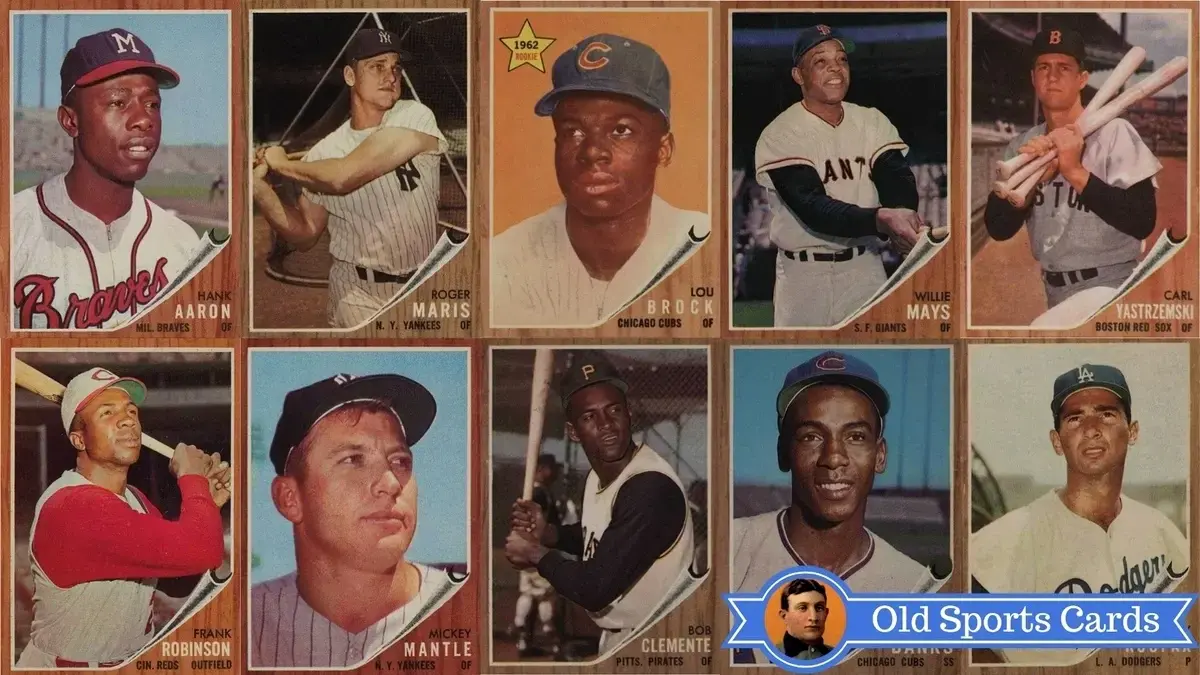
Whether you love or hate the 1962 Topps baseball card set, there is one thing you cannot argue: They are instantly recognizable due to those woodgrain borders.
Many collectors love this set.
Many hate it.
And it all has to do with those wood grain borders which were an unusual design choice and condition nightmare as they easily show wear and tear.
Regardless of which side you’re on, this set does pack some incredible star power and a couple of decent rookie cards.
And in this guide, I walk through which are the ten most valuable.
Let’s jump right in!
1962 Topps Baseball Set Snapshot
SET DETAILS
598
Lou Brock, Gaylord Perry, Joe Torre, Bob Uecker
Mickey Mantle, Hank Aaron, Roberto Clemente, Willie Mays, Sandy Koufax
GRADING ANALYSIS
301,062
TOTAL GRADED BY PSA
63,023
PSA 8 Population
20.9%
PSA 8 Grade Rate
MOST GRADED CARDS
1
#200 Mickey Mantle
2.8%
8,477
2
#10 Bob Clemente
2.2%
6,499
3
#18 Managers’ Dream M.Mantle/W.Mays
2.0%
6,169
Need Help Selling Your Sports Cards?
Fill out the form below and I’ll get back to you within 24 hours. No obligation.

Ross Uitts – Owner
-
#1
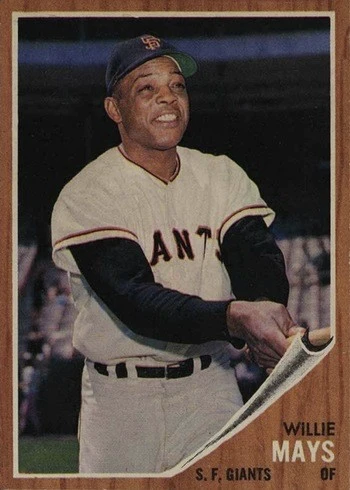
1962 Topps #300 Willie Mays
PSA 8 Value $19,000Total PSA Population 4,718PSA 8 Population 86PSA 8 Grade Rate 1.8% (Set Avg: 20.9%)Mays was arguably a better ball player than Mickey Mantle was, even if Mantle had never injured his knee.
But, his cards consistently lag Mantle’s in terms of value thus proving that a player’s skill doesn’t always trump his popularity when it comes to the desirability of his baseball cards.
Had Willie Mays been a Yankee and Mantle a Giant then the story would’ve likely been much different.
Regardless, Mays’ 1962 Topps issue can still fetch major money in mint condition often going for over $20,000 if and when one in PSA 9 condition comes up for sale or auction.
-
#2
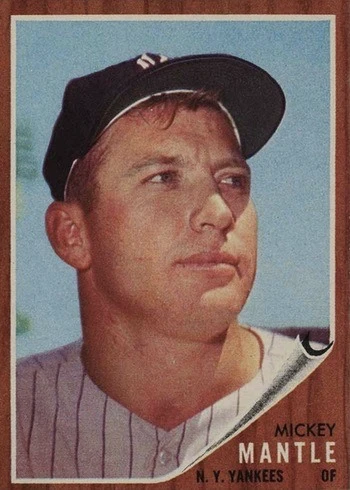
1962 Topps #200 Mickey Mantle
PSA 8 Value $17,000Total PSA Population 8,477PSA 8 Population 177PSA 8 Grade Rate 2.1% (Set Avg: 20.9%)With the exception of the 1963 Topps (Pete Rose rookie), 1967 Topps (Tom Seaver rookie), and 1968 Topps (Nolan Ryan rookie) sets, Mickey Mantle is always the key card in any set in which he appeared.
That’s how beloved he is in this hobby…
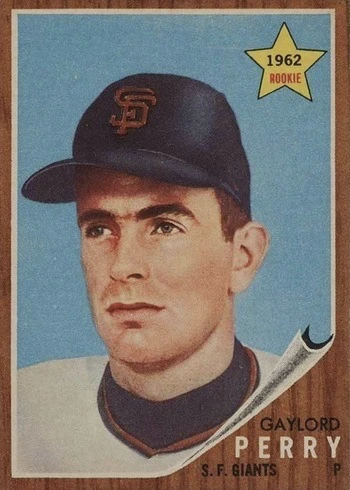
The 1962 Topps set does contain rookie cards of Lou Brock and Gaylord Perry but their star power just wasn’t quite large enough to top the Mick.
The head shot of Mantle looking off into the distance may not make for his most exciting but it gives us a glimpse into a legend still in his prime but on the back half of his career.
He had just come off a monumental season the year before, arguably one of the most historic of any seasons the sport had witnessed, after chasing Ruth’s single season home run record alongside Roger Maris.
-
#3
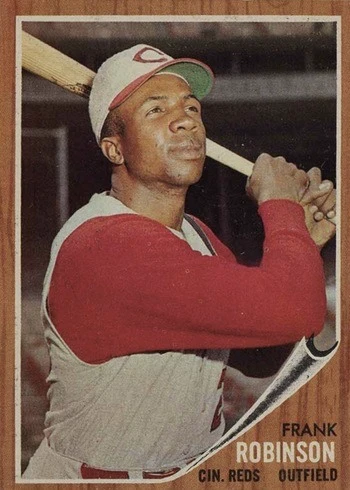
1962 Topps #350 Frank Robinson
PSA 8 Value $4,500Total PSA Population 1,721PSA 8 Population 42PSA 8 Grade Rate 2.4% (Set Avg: 20.9%)Arguably the most underrated player of his era, Frank Robinson is last but not least on our liSt. Robinson quietly racked up 586 home runs, Rookie of the Year honors (1956), a Triple Crown Award, 14 All-Star appearances, 2 World Series championships and 2 MVP awards over his Hall of Fame career.
You’d think with stats like those that Robinson would earn more attention than he did but he just seemed to be overshadowed by guys like Mantle, Mays, Aaron and Clemente during that era.
The 1961 season was a monster year for Robinson after he picked up his first of two MVP awards after batting .323 with 37 home runs, 124 RBI and 117 runs scored.
And the 1962 season was even better for him in all four of those categories (.342 batting average, 39 home runs, 136 RBI and 134 runs scored but he finished only fourth in MVP voting.
-
#4
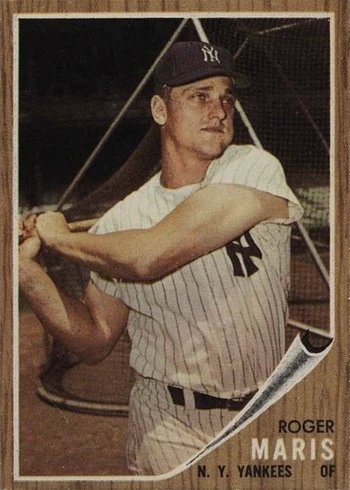
1962 Topps #1 Roger Maris
PSA 8 Value $4,500Total PSA Population 4,853PSA 8 Population 86PSA 8 Grade Rate 1.8% (Set Avg: 20.9%)How does Topps reward you when you break Babe Ruth’s single season home run record, one of the most iconic records in all of sports?
They make you card #1 in their baseball card set the following year.
And when a card is #1 in any vintage set, it automatically gets another boost in value no matter who the player is.
Because it was card #1 that means it was typically positioned in the upper corner of the printing sheet or sitting atop a kid’s stack of baseball cards as they were usually stacked in order.
Those two things greatly increased the likelihood that the card was exposed to greater wear and tear than others in the set.
Don’t get me wrong, Roger Maris cards are always highly-desired, but to beat out guys like Hank Aaron and Roberto Clemente then it takes an extra something like being card #1 to pull that off.
-
#5
1962 Topps #349 Paul Foytack
PSA 8 Value $3,850Total PSA Population 286PSA 8 Population 21PSA 8 Grade Rate 7.3% (Set Avg: 20.9%)Paul Foytack survived the 1961-62 offseason buzz to become the active Detroit Tiger with the longest tenure.
Foytack was wildly inconsistent in his first seven seasons or so in Motown, alternating high-speed whiffs with bushels of walks and homers allowed.
However, the righty was calm, well-humored, and unshaken by adversity.
If anything else, it made him a valuable innings eater.
By ’62, the 31-year-old’s fastball was starting to diminish, and manager Bob Scheffing took that as a sign to move him to the bullpen.
It didn’t work great, and Foytack was eventually returned to the rotation.
He ended up starting 21 of his 28 appearances for the 85-win Tigers, posting a 10-7 record with a 4.39 ERA.
The win-loss mark looks nice, but it belies the dozens of walks (86) that plagued him all year, along with his customary double-digit home runs allowed (18).
Foytack finished the year with a 1.608 WHIP, around 25% worse than the year before.

-
#6
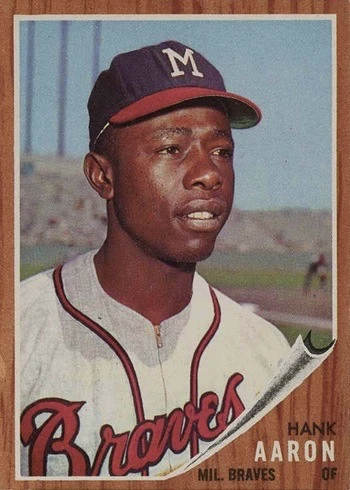
1962 Topps #320 Hank Aaron
PSA 8 Value $3,500Total PSA Population 4,645PSA 8 Population 225PSA 8 Grade Rate 4.8% (Set Avg: 20.9%)Speaking of Hank Aaron, he’s next on our list as his 1962 Topps card can also fetch five figures in PSA 9 mint condition.
Like Mantle’s card, I would’ve loved to have seen Topps picture Aaron in a batting pose or at least something with a bit more action in it.
But, honestly, when it comes to cards of guys like Hank Aaron, it’s really tough to complain too much about how they’re portrayed.
Just owning one is awesome enough by itself.
-
#7
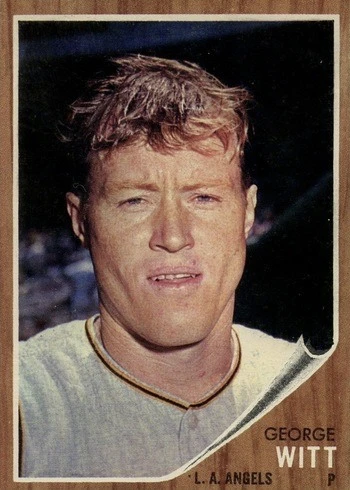
1962 Topps #287 George Witt
PSA 8 Value $3,500Total PSA Population 493PSA 8 Population 19PSA 8 Grade Rate 3.9% (Set Avg: 20.9%)George “Red” Witt’s 1958 rookie season stands up to the very best first-year performances in MLB history.
Witt had a Paul Skenes-like impact for that ’58 Pirates squad, pitching to a 9-2 record and 1.61 ERA in 18 outings.
Pittsburgh finished in second place that year and looked to have its top-of-the-rotation starter locked down for years to come.
Elbow issues hounded Witt from 1959, cutting into his effectiveness and playing time.
By 1962, the righty’s considerable potential was all but exhausted.
Witt gave it with the ’62 Los Angeles Angels, still lying that he was two years younger than he actually was (30).
He looked like a worn-out veteran, regardless, and was dropped by the Halos after posting an 8.10 ERA in five appearances.
The California native got one more crack with the Houston Colt .45s that year, his last-ever MLB action.
Witt went 0-2 with a 7.04 ERA in those final eight appearances.
-
#8
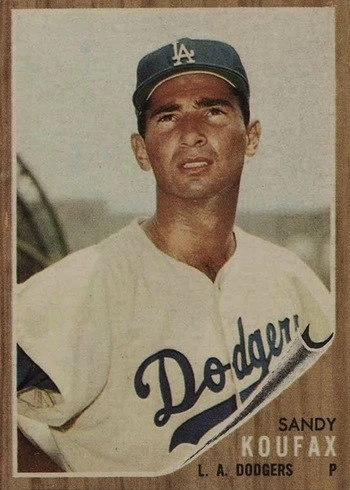
1962 Topps #5 Sandy Koufax
PSA 8 Value $3,500Total PSA Population 4,923PSA 8 Population 171PSA 8 Grade Rate 3.5% (Set Avg: 20.9%)During the 1961 season, Sandy Koufax broke out in a major way and began to mold himself into the legend as we know him today.
He finally got his blazing fastball under control and perfected his offspeed pitches into one of the most formidable arsenals of any pitcher who ever graced the mound.
His cards are always key to any set in which he appeared but like Maris, he also gets a bit of a boost from where his card rested in the set sequence.
Card number 5 would have been just close enough to the top of any kid’s stack to receive enough extra damage from those infamous rubber bands with which those stacks were bound.
-
#9
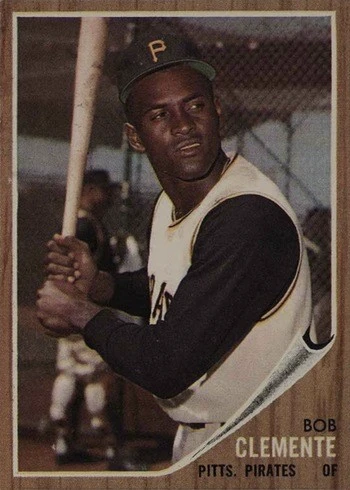
1962 Topps #10 Roberto Clemente
PSA 8 Value $3,100Total PSA PopulationPSA 8 PopulationPSA 8 Grade Rate 0.0% (Set Avg: 20.9%)Look no farther for a sign of the times than how Topps positioned Clemente as “Bob” on his 1962 issue.
That aside, Clemente’s card is one of the more aesthetically appealing on this liSt. I love those old sleeveless Pirates jersey and I’ll take a batting pose versus a head shot any day.
Clemente turned in a solid season in 1962 after batting .351, scoring 100 runs, hitting 23 home runs, driving in 89 RBI and picking up a Gold Glove on his way to finishing fourth in the MVP vote.
-
#10
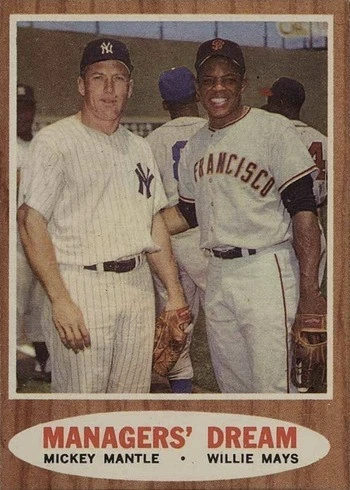
1962 Topps #18 Managers Dream
PSA 8 Value $2,750Total PSA PopulationPSA 8 PopulationPSA 8 Grade Rate 0.0% (Set Avg: 20.9%)It’s probably obvious what makes this card so desirable: Mantle and Mays both on one card at the same time.
And the phrase “Managers‘ Dream“ perfectly describes just exactly what these two legends were.
I also love that we can see Hank Aaron in the background behind Mays standing to the right of the Los Angeles Dodgers’ All-Star catcher, Johnny Roseboro.
-
#11
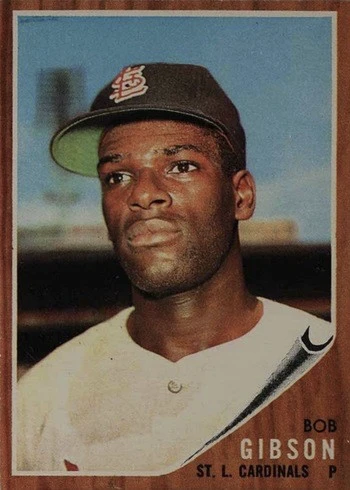
1962 Topps #530 Bob Gibson
PSA 8 Value $2,600Total PSA Population 1,502PSA 8 Population 101PSA 8 Grade Rate 6.7% (Set Avg: 20.9%)Bob Gibson spent the 1961-62 offseason in the lab, tweaking the grips and approaches of his explosive fastball/slider combination.
The 6-foot-1 St. Louis Cardinals righty was exceedingly hard to hit the previous year for two reasons: his dominant stuff and his perpetual inability to find the strike zone.
Gibson dealt out an NL-worst 119 walks in 211.1 innings during the ’61 campaign, a big reason why he lost (12) just about as many games as he won (13).
In desperate need to cut walks, Gibson was obsessed with painting the corners during winter workouts.
The more reps he got, the brighter his (eventual) Hall-of-Fame spark got.
The Cardinals reaped the rewards of Gibson’s hard work in 1962, as the 26-year-old cut his walks-per-9 by nearly 30% from 5.1 to 3.7.
With the free passes less of an issue, Gibson dropped his ERA to 2.85 and racked up the Ks, crossing 200 strikeouts (208) for the first of five consecutive seasons.
-
#12
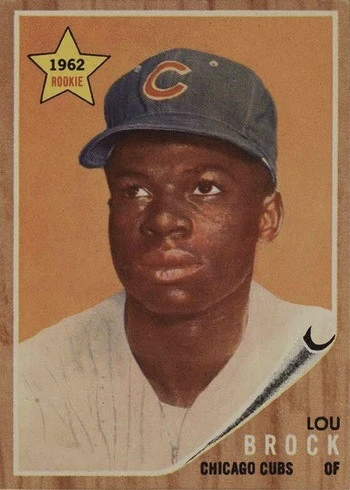
1962 Topps #387 Lou Brock Rookie Card
Rookie CardPSA 8 Value $2,250Total PSA PopulationPSA 8 PopulationPSA 8 Grade Rate 0.0% (Set Avg: 20.9%)Lou Brock’s rookie card is one of the most sough-after rookie cards of the 1960’s.
This is also one of those cases where I think it’s somewhat unfortunate that a player’s rookie card portrays him as a member of a team with which he isn’t widely associated, in this case the Cubs instead of the Cardinals.
Maybe more unfortunate is how Cubs fans are constantly reminded of what could have been every time they look at this card.
Regardless, it’s a great-looking card with strong eye appeal boosted by the orange background and star „1962 Rookie“ callout.
I’d love to see Brock’s rookie higher on this list, but it just shows how tough it is to beat out the star power that guys like Mantle, Mays and Aaron have in this hobby.
-
#13
1962 Topps #199 Gaylord Perry Rookie Card
Rookie CardPSA 8 Value $1,850Total PSA PopulationPSA 8 PopulationPSA 8 Grade Rate 0.0% (Set Avg: 20.9%)San Francisco Giants prospect Gaylord Perry put up a huge year at Triple-A Tacoma in 1961, announcing himself as a favorite to make next year’s Big-League roster.
Perry went 16-10 with a 2.55 ERA that year, tying for the PCL lead in wins and finishing third for the league’s ERA title.
He went into ’62 Spring Training as a prospect-to-watch, and he impressed enough over the course of a month to earn the team’s tenth pitching spot.
The 23-year-old was given a swing role by manager Al Dark, alternating assignments between relief appearances and spot starts.
With the Giants on their way to an NL pennant, Perry had a short leash and needed to show out to stay aboard.
Perry, frustratingly, fell short.
He pitched to an unsightly 5.23 ERA in 13 appearances (seven starts), those outings bookending a months-long demotion back to Tacoma.
Perry was not eligible to pitch in the World Series.
He would never pitch in a Fall Classic during his 22-year Hall-of-Fame career.
-
#14
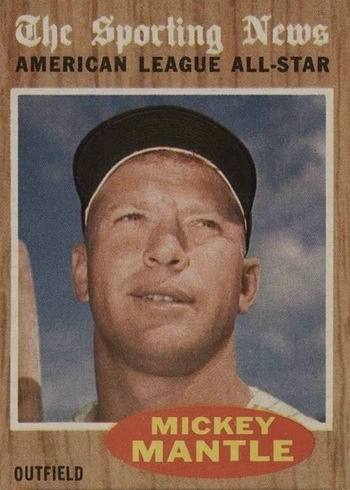
1962 Topps #471 Mickey Mantle All-Star
PSA 8 Value $1,700Total PSA PopulationPSA 8 PopulationPSA 8 Grade Rate 0.0% (Set Avg: 20.9%)You don’t see too many All-Star cards among the top of many vintage sets so this card is definitely an unusual case.
Then again, when it’s a Mickey Mantle card of any type under consideration, there shouldn’t be too much surprise.
The Sporting News All-Star subset included 20 cards in total, 10 players from the American League and 10 from the National League, As you can imagine, Mantle’s is by far the most desirable of them all.
-
#15
1962 Topps #318 Mickey Mantle The Switch Hitter Connects
PSA 8 Value $1,600Total PSA PopulationPSA 8 PopulationPSA 8 Grade Rate 0.0% (Set Avg: 20.9%)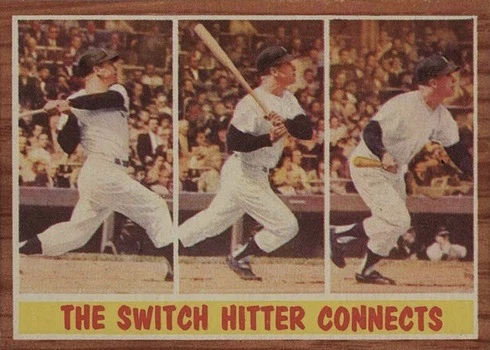
-
#16
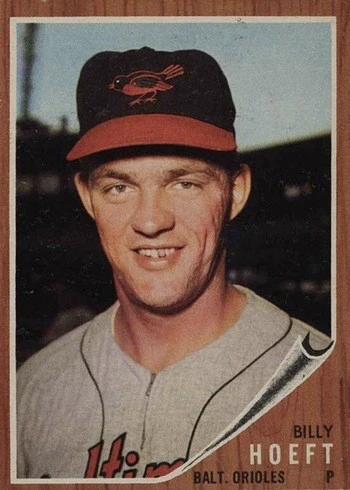
1962 Topps #134 Billy Hoeft Blue Sky Variation
PSA 8 Value $1,600Total PSA PopulationPSA 8 PopulationPSA 8 Grade Rate 0.0% (Set Avg: 20.9%)Billy Hoeft never quite delivered on the promise of his early success with the Detroit Tigers.
In 1955, a 23-year-old Hoeft jumped several levels to reach All-Star status.
He won sixteen games and pitched to an ERA under three, even earning a down-ballot MVP mention.
The next year, Hoeft’s ERA ballooned over four, but he still won 20 games.
It felt certain that Hoeft would be a long-time starter in Motown.
Over the next couple of years, Hoeft pitched at a mediocre clip and started to lose favor with the team’s front office.
Trade rumors followed, and Hoeft was eventually dumped to Boston in 1959.
From there, Hoeft floated mostly as a long reliever.
By the time he reached his final year in Baltimore in 1962, Hoeft’s days as a starter were numbered.
The 30-year-old appeared in 57 games, pitching to a 4.59 ERA in 113.2 innings.
Only four of those outings were starts, and Hoeft would only make two more starts over the final four years of his career.
-
#17
1962 Topps #288 Billy Williams
PSA 8 Value $1,550Total PSA Population 1,217PSA 8 Population 68PSA 8 Grade Rate 5.6% (Set Avg: 20.9%)Billy Williams was too quiet and too consistent to be a true superstar.
However, that was just fine with the Chicago Cubs and their loyal fan base.
After earning recognition as the 1961 NL Rookie-of-the-Year, Williams settled into a career-long groove with few sharp peaks and almost no valleys.
He was a slugger you could set your watch to, always here to bring a .290 average, 20 to 30 home runs, and 90 to 100 RBIs each season.
Starting in 1962 (22), Williams posted twelve consecutive seasons of twenty homers or more.
The worst his average ever touched was .276 (1966).
The tabloid attention never came, but Williams still put himself on a steady, well-tread path to Cooperstown.
In ’62, the 24-year-old left fielder followed his RoTY breakout with his first All-Star selection.
He slashed .298/.369/.466 for the ninth-place Cubs with 22 homers, 94 runs, and 91 RBIs in 159 games played.

-
#18
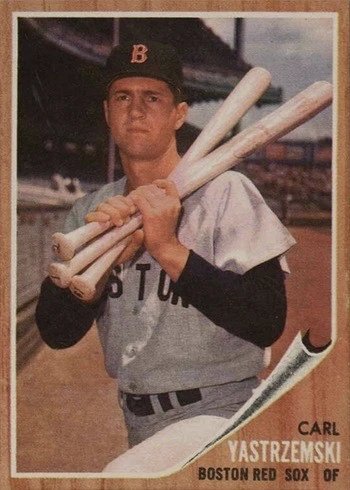
1962 Topps #425 Carl Yastrzemski
PSA 8 Value $1,100Total PSA Population 2,721PSA 8 Population 188PSA 8 Grade Rate 6.9% (Set Avg: 20.9%)Carl Yastrzemski took both advice and the baton from the great Ted Williams.
The young Boston Red Sox left fielder scuffled early in his 1961 rookie year, drawing a visit from the recently retired Williams.
“Teddy Ballgame” sat back and watched Yaz take batting practice before offering him a simple piece of advice: trust your swing and just go hit.
Williams’ simple approach was anything but.
It unlocked Yaz for the remainder of the campaign and helped set the stage for an even better sophomore year.
In 1962, the 22-year-old Yastrzemski boosted his average to nearly .300 (.296) to go along with an .832 OPS and 120 OPS+.
Yaz smacked 19 homers, rapped 43 triples, scored 99 runs, and drove in 94 while settling in as arguably the best defensive left fielder in the game.
Yastrzemski’s swing was loose, and his hands were steady enough to follow Williams as “the guy” at Fenway.
-
#19
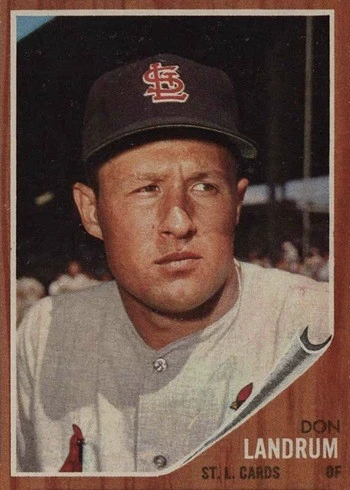
1962 Topps #323 Don Landrum
PSA 8 Value $1,050Total PSA Population 363PSA 8 Population 23PSA 8 Grade Rate 6.3% (Set Avg: 20.9%)Don Landrum finally caught on in 1962 after mostly unsuccessful stints with the Philadelphia Phillies and St. Louis Cardinals.
Landrum spent parts of four seasons with Philly and St. Louis, mostly as a pinch-hitter and spot starter in the outfield.
It was only when he was traded to the Chicago Cubs during the ’62 campaign that we got a good look at what Landrum could do.
With the Cubs languishing near the cellar of the National League, a door opened for Landrum to get the most playing time of his career thus far.
He got the most out of it, hitting .282 with a .369 on-base percentage in 83 games.
The 26-year-old offered little power (1 HR) but above-average defense and contact rates.
Landrum would see regular work with the Cubs over the next few years and would gain a one-of-a-kind reputation for ruining no-hitters, adding top names like Sandy Koufax and Bob Friend to a unique, impressive liSt.
-
#20
1962 Topps #139 Babe Ruth Hits 60
PSA 8 Value $1,050Total PSA PopulationPSA 8 PopulationPSA 8 Grade Rate 0.0% (Set Avg: 20.9%)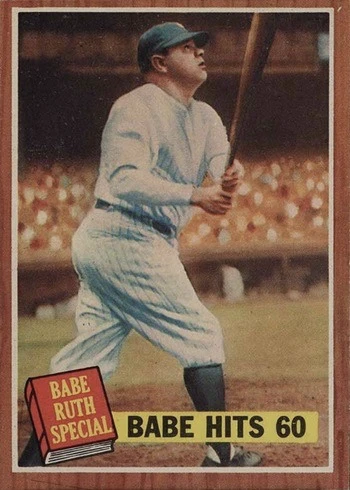
-
#21
1962 Topps #594 Bob Uecker Rookie Card
Rookie CardPSA 8 Value $950Total PSA PopulationPSA 8 PopulationPSA 8 Grade Rate 0.0% (Set Avg: 20.9%)Leave it to the late Bob Uecker to sum up his career with the proper punch.
“Anybody with ability can play in the big leagues,” Uecker once mused.
“To be able to trick people year in and year out the way I did, I think that was a much greater feat.” The man who’d go on to fame as a play-by-play man and cult cinema hero was never a star on the field.
He wasn’t even average.
Uecker was a .200 career hitter with an OPS+ 37 percentage points worse than the average ballplayer.
He was a good defensive backup catcher, especially in his 1962-1963 MLB debut with Milwaukee.
And, he did manage to hit a respectable .250 in each of those two campaigns.
That would end up being Uecker’s peak.
He’d hit over .200 in just two of the next six seasons, with a Hall-of-Fame career in broadcasting waiting for him after.

-
#22
1962 Topps #218 Joe Torre Rookie Card
Rookie CardPSA 8 Value $900Total PSA Population 1,844PSA 8 Population 123PSA 8 Grade Rate 6.7% (Set Avg: 20.9%)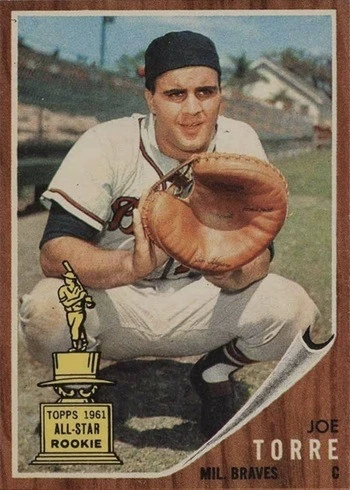
-
#23
1962 Topps #500 Duke Snider
PSA 8 Value $850Total PSA Population 1,056PSA 8 Population 128PSA 8 Grade Rate 12.1% (Set Avg: 20.9%)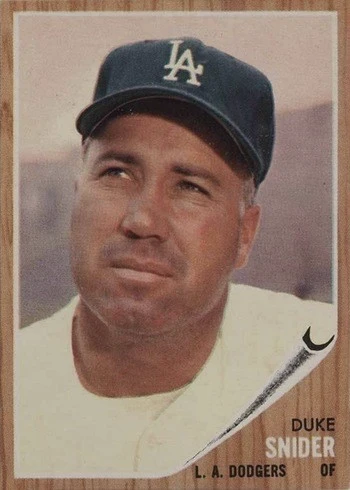
-
#24
1962 Topps #360 Yogi Berra
PSA 8 Value $800Total PSA Population 2,430PSA 8 Population 156PSA 8 Grade Rate 6.4% (Set Avg: 20.9%)
-
#25
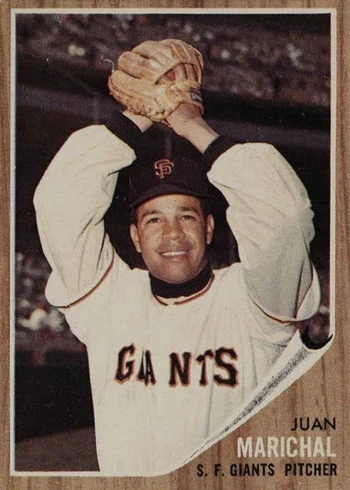
1962 Topps #505 Juan Marichal
PSA 8 Value $750Total PSA Population 1,092PSA 8 Population 87PSA 8 Grade Rate 8.0% (Set Avg: 20.9%)The San Francisco Giants had one of the most underrated title droughts in baseball lore.
In 1949, the franchise won its seventh and final World Title as residents of New York.
The club broke hearts all over the Boroughs in 1958, joining the departing Dodgers on the West CoaSt. It only took two years for the newly minted Dodgers to bring a trophy to California.
As for the Giants?
It took 53 years.
San Francisco’s first close-but-no-cigar moment of their five-decade drought came in 1962.
Powered by the MVP-level play of center fielder Willie Mays and young starting pitcher Juan Marichal, the pennant-winning Giants won over 100 games for the first time since 1913.
The World Series, though, was unlucky and unkind.
After winning 18 games and earning two All-Star nods in the regular season, Marichal was lifted midway through Game 4 with a hand injury from an errant bunt attempt.
Marichal was ruled out of the rest of the Series, and New York took advantage for a seven-game triumph.

Ross’s Take
Whether you love or hate this set, the ten most valuable 1968 Topps baseball cards on this list have proven to be quite expensive in top grade.
The Brock and Perry rookies anchor a 598 checklist that is packed with many stars and Hall of Famers.
One of my favorite quirks about this set is how the Series 2 cards (#110-196) were printed in a limited green tint variation that can be fun to pursue for master set collectors.
Within the set were also several different subsets, including: League Leaders (#51-60) The Babe Ruth Series (#135-144) World Series Highlights (#232-237) In Action (#311-319) The Sporting News All-Stars (#390-399 NL and 466-475 AL) Rookie Parade (#591-598) While the hobby may have mixed opinions on the design of these cards, it is definitely a unique set and is notorious for being one of the most condition-sensitive sets of the 1960s.
